A Brief History of Tea Parties: From Royal Gatherings to Modern Celebrations

Tea parties trace their refined roots to 1662 when Portuguese princess Catherine of Braganza married England's King Charles II, bringing tea as part of her dowry. You'll find that these royal gatherings quickly became the height of fashion, with Catherine's afternoon tea events setting the social standard. By the 1830s, the Duchess of Bedford had popularized afternoon tea among the upper class, while tea gardens made the tradition accessible to wider society.
Today's tea parties still honor many of these historical customs, from fine china service to proper etiquette. The intricate fabric of tea party traditions holds countless fascinating stories waiting to be unearthed.
Royal Origins and Portuguese Influence
The marriage of a Portuguese princess would forever change England's drinking habits. When Catherine of Braganza arrived in England in 1662 to marry King Charles II, she brought more than just her Portuguese entourage - she introduced a beverage that would become synonymous with English culture: tea.
As part of her wedding dowry from Portugal, Catherine received chests of this prized drink, which she'd regularly enjoyed in her homeland. You might be surprised to learn that before her arrival, tea wasn't popular in England at all. Catherine's influence quickly changed that, as she made tea drinking fashionable within the royal court. Her afternoon tea gatherings became the social events of the season, with English nobility avid to emulate the Queen's sophisticated Portuguese customs.
Catherine's impact extended beyond just tea culture. When she first arrived in London, her welcome procession included Portuguese musicians and traditional bagpipes, adding an exotic flair to English royal ceremonies. Her dual role as Queen of England and later as regent of Portugal cemented her position as a cultural bridge between the two nations, with tea remaining her most enduring legacy. The Portuguese influence on tea culture was so significant that their term Cha for tea became widely adopted across several European languages.
The Victorian Tea Revolution
While Catherine of Braganza planted tea's royal roots in England, it wasn't until the Victorian era that this beverage truly conquered British society. In the early 19th century, as tea cultivation secrets spread and European plantations emerged, the drink became more accessible to the British upper class. You'd find ladies gathering in drawing rooms across England, turning tea drinking into an elaborate social event.
The revolution gained momentum when the Duchess of Bedford introduced a novel concept in the 1830s. Noticing a "sinkful feeling" between lunch and dinner, she began hosting intimate afternoon tea parties. This practice quickly caught on, especially after Queen Victoria began attending such gatherings, lending them royal approval and establishing them as a cornerstone of high society entertainment.
You'll find it interesting that women, previously banned from coffeehouses, found their social freedom in tea gardens and drawing rooms. These venues became fashionable alternatives where ladies could gather without scrutiny. The tea party evolved into more than just a refreshment break - it became a sophisticated ritual that defined Victorian social etiquette and would influence British culture for generations to come. Ladies would dress in their finest attire, including floor-length gowns and gloves, to participate in these elegant social occasions.
Tea Gardens and Social Gatherings
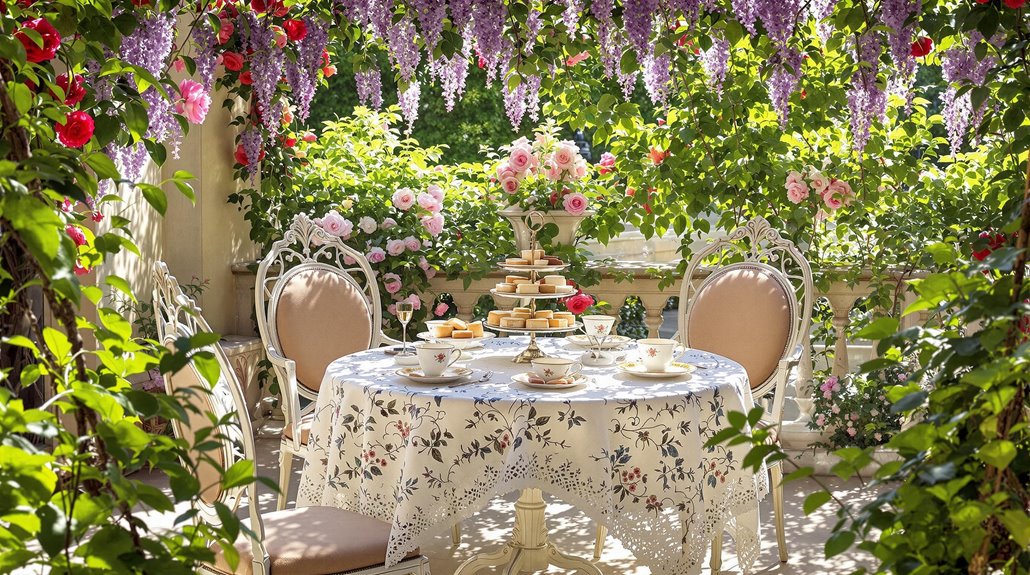
Gardens across England blossomed into lively social centers during the 18th century, offering a stark contrast to the male-dominated coffeehouses of the time. While women weren't welcome in coffeehouses, tea gardens became the perfect alternative, providing a respectable venue where both ladies and gentlemen could gather freely and engage in social activities.
You'll find that these tea gardens played an essential role in democratizing tea drinking, making it accessible to people from various social backgrounds. The gardens offered more than just refreshments; they created an atmosphere where you could mingle, converse, and enjoy the pleasant surroundings. Queen Anne's influence helped establish tea drinking as a fashionable custom, particularly among highborn ladies who'd gather around the tea table for social exchanges.
This evolution of tea culture eventually led to the establishment of high tea traditions in the 1830s, when the Duchess of Bedford introduced the concept of afternoon tea. The practice you might recognize today, with its elaborate serving rituals and social etiquette, traces its roots to these 18th-century tea gardens, where the foundations of Britain's tea-drinking culture were firmly planted. These gatherings evolved into sophisticated venues for cultural exchange and education, where visitors could learn about proper brewing techniques and tea varieties while socializing.
Customs and Etiquette Development
Throughout the development of tea parties, intricate rules of etiquette emerged to govern social interactions and maintain proper decorum. When King Charles II and Queen Catherine popularized tea parties in England, they established standards that would shape centuries of social customs.
You'll find these traditions continue today, with specific rules about handling your teacup and utensils. When enjoying your tea, you'll want to look into your cup rather than over it, and remember to add sugar and lemon before milk. Your spoon should rest behind the cup on the saucer once you've finished stirring, and you'll want to avoid clinking it against the china.
The consumption of traditional accompaniments, particularly scones with clotted cream and jam, follows its own protocol. You'll need to split your scone with a knife, while most other treats can be eaten with your fingers in small, manageable bites. Your napkin belongs on your lap, never used as a handkerchief, and your purse should rest either on your lap or against your chair. Engaging in pleasant conversation while following these customs remains essential to proper tea party etiquette. The formal setting is enhanced by a linen tablecloth that protects the table while creating an elegant atmosphere for guests.
Tea Service and Fine China
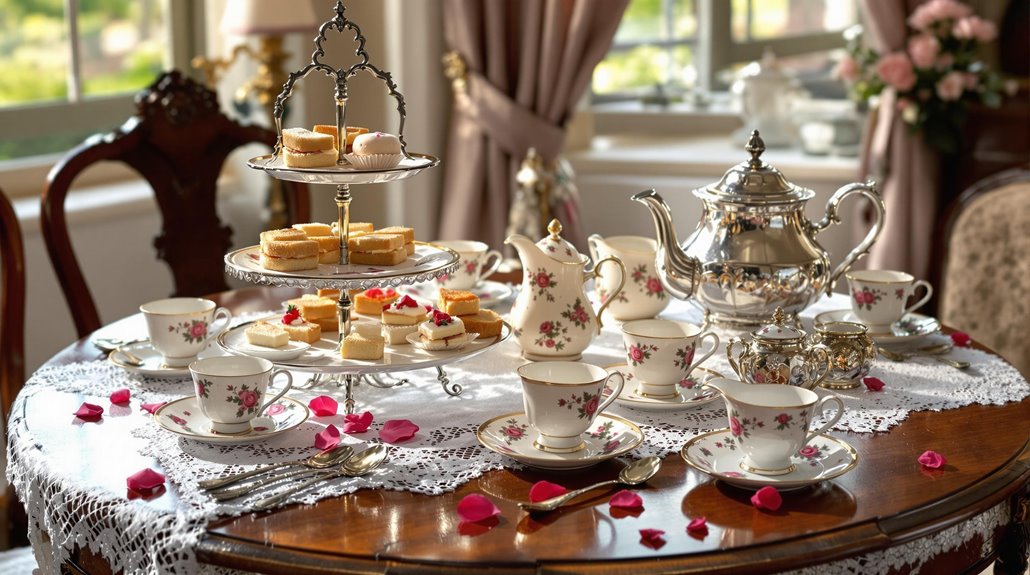
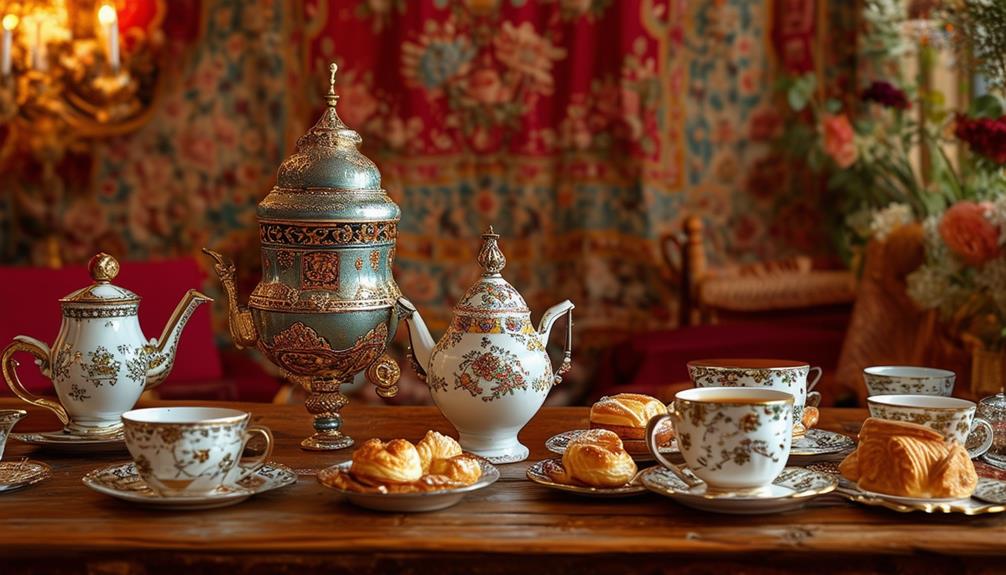
The refined presentation of tea service demanded the finest china and most exquisite serving pieces. Following traditions established during Queen Charles II's reign, you'd find elaborate tea sets featuring delicate porcelain teacups, matching saucers, and ornately decorated plates. These weren't just functional items - they were statements of sophistication and social status.
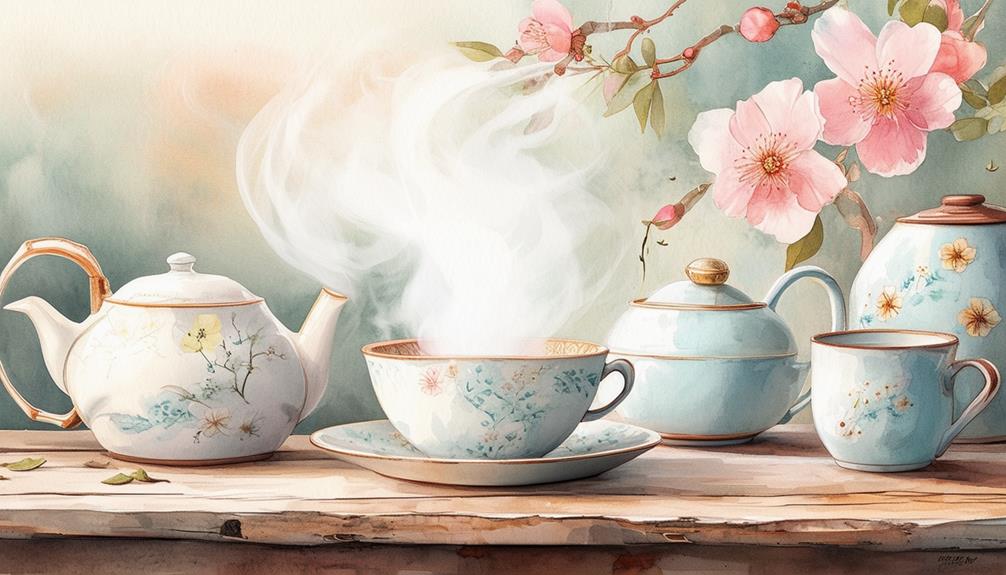
At the heart of any proper tea service, you'd uncover a carefully selected porcelain teapot, often wrapped in a tea cozy to maintain the perfect brewing temperature. The fine china used in these services typically showcased intricate floral patterns or gilded embellishments, reflecting the Victorian era's appreciation for ornate details. You'd notice the thoughtful arrangement of accompanying pieces: silver or crystal sugar bowls paired with delicate tongs, small milk jugs, and lemon dishes, all coordinated to create a harmonious presentation.
The attention to detail didn't stop at the teaware - each piece played an essential role in the ceremony of afternoon tea. You'd find that even the smallest elements, from the sugar tongs to the milk jugs, were carefully chosen to enhance the overall experience and maintain the prestigious nature of tea service.
Global Tea Party Traditions
While British tea service established many formal customs, tea parties around the world have evolved into distinctly rich cultural experiences. Though Charles II of England helped popularize tea drinking after his marriage to Catherine of Braganza, daughter of John IV of Portugal, you'll find that different cultures have developed their own unique ceremonies and gatherings.
In Japan, China, and Morocco, you'll uncover tea ceremonies that go far beyond simple refreshment, incorporating precise movements, specific etiquette, and deep symbolic meaning. When you visit Iran's Chaikhanas, you'll experience social hubs that have brought people together for over a century, while Russia's Zavarka tradition will introduce you to a distinctive method of brewing strong tea that's then diluted to taste.
You'll notice that American tea traditions reflect both British colonial heritage and independent evolution. While the Boston Tea Party marked a shift toward coffee during the Revolution, tea parties later regained prominence. You'll find this especially true in Washington society, where First Ladies have maintained the tradition of hosting elaborate tea gatherings, much like the influential women of London's early tea culture.
Modern Tea Party Celebrations
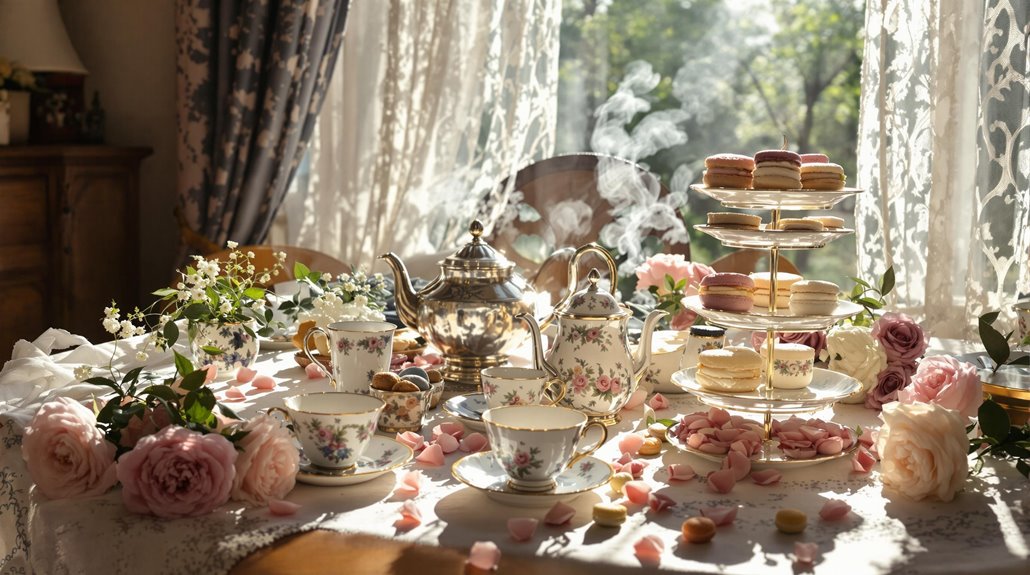
Today's tea parties blend timeless sophistication with modern convenience, adapting centuries-old traditions for contemporary lifestyles. While the practice may have begun with Anna Maria, Duchess of Bedford's late afternoon gatherings and gained prominence during Charles II and Queen's reign, modern celebrations have evolved to suit diverse occasions and preferences.
You'll find tea parties now serving as refined settings for baby showers, bridal celebrations, and milestone birthdays. The tradition has also found new life through pop culture inspirations, with themed gatherings that transport guests to the refined world of Downton Abbey or the fanciful domain of Alice in Wonderland. Hotels and specialized tea houses have made it easier than ever to experience the luxury once reserved for nobility, offering carefully curated afternoon tea experiences complete with traditional service and delicacies.
For those who prefer hosting at home, catering services and DIY tea party kits have simplified the process. You can now recreate the magic of a proper tea service without the historical intricacies, choosing from an array of loose-leaf teas, freshly baked scones, and sophisticated accompaniments that would make the Duchess of Bedford proud.
Tea Party Menu Essentials
Planning a successful tea party depends heavily on assembling the right menu components, which have remained remarkably consistent since Victorian times. You'll want to start with a variety of finger sandwiches, including classic combinations like cucumber, egg salad, smoked salmon, and tomato with chutney. These delicate sandwiches provide a savory foundation for the traditional three-tiered presentation.
The star of any tea party is undoubtedly the scones, served warm with generous portions of clotted cream and preserves. You can offer traditional options like strawberry jam or branch out with lemon curd for a citrusy twist. The top tier typically features an assortment of homemade cakes and pastries that add a sweet finale to the experience.
Your tea selection should include both classic and adventurous options. Consider offering powerful black teas like Assam and Darjeeling alongside aromatic choices such as Earl Grey and Lapsang Souchong. For an extra touch of elegance, you might include a glass of champagne or sparkling wine, which has become increasingly popular at modern tea parties.