What Is the Process of Making Tea Called?

The process of making tea is called steeping, where you soak tea leaves in hot water to draw out the rich flavors and nutrients. It involves selecting high-quality leaves, heating water to the ideal temperature, and measuring the right amount of tea. You'll then steep the leaves for 2 to 5 minutes depending on the type, and ultimately strain them to enjoy a well-brewed cup. Different teas like green, black, and oolong have specific requirements to bring out their best characteristics. Curious about how each tea type and cultural rituals improve this process? Keep going to find out more.
Key Takeaways
- The process of making tea is called steeping.
- Steeping involves soaking tea leaves in hot water to extract flavors and nutrients.
- Infusion is another term often used interchangeably with steeping.
- Brewing refers to the method of preparing tea, including water temperature and steeping time.
- Different brewing methods like Gongfu and Western brewing define the steeping process.
Historical Background
When you investigate the historical background of tea, you'll reveal it dates back thousands of years. Tea origins are believed to trace back to ancient China around 2737 B.C., when Emperor Shen Nong accidentally stumbled upon tea leaves falling into boiling water. This serendipitous event marked the beginning of tea's rich history and its rise in cultural significance.
In ancient times, tea was much more than a mere beverage; it was integral to numerous ancient rituals. Chinese monks used tea to stay alert during long meditation sessions, while the elite enjoyed elaborate tea ceremonies that showcased their refined etiquette. As tea traveled beyond China, it influenced diverse cultures, each adopting and modifying their own unique tea rituals.
Japan, for instance, developed the intricate Tea Ceremony, or "Chanoyu," emphasizing harmony, respect, purity, and tranquility. Meanwhile, in India, Ayurvedic texts reference tea as a medicinal drink, highlighting its health benefits. Across continents, tea became synonymous with hospitality and social interaction.
Understanding tea's historical background enriches your appreciation of this timeless beverage. Its ancient rituals and origins illustrate not just the evolution of tea but also the human connection fostered through its communal enjoyment.
Terminology Explained
To understand the nuances of making tea, it is essential to get acquainted with some key terminology. Initially, let's start with "steeping," a term you'll frequently encounter. Steeping refers to the process of soaking tea leaves in hot water to extract flavors and nutrients. "Infusion" is another word often used interchangeably with steeping, though it can sometimes refer to herbal teas specifically.
Next, "oxidation" is a vital term in tea terminology. This natural process happens when tea leaves are exposed to air, affecting their color and flavor profile. Black tea is fully oxidized, while green tea undergoes minimal oxidation.
"Brewing methods" also play an important role in how your tea turns out. For example, "gongfu" is a traditional Chinese method that involves multiple short steepings, typically in a small teapot. On the other hand, "Western brewing" usually involves a single, longer steeping period, often in a larger teapot.
Another term you should know is "terroir," which refers to the environment where the tea is grown. Factors like soil, climate, and altitude can greatly influence the tea's flavor.
Steps in Tea Brewing
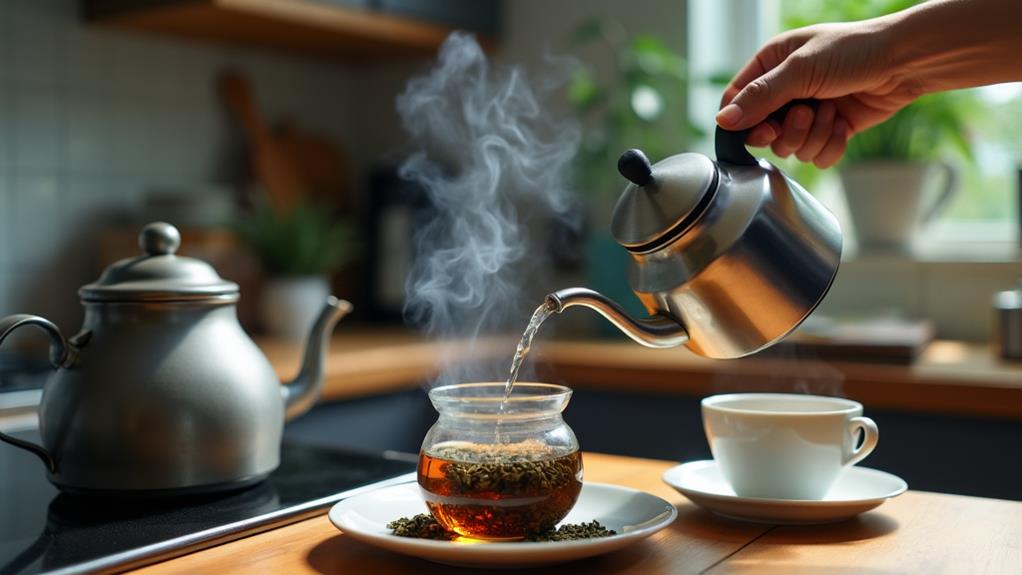
Understanding the terminology sets a solid foundation, so let's move on to the actual steps in tea brewing. Initially, it's crucial to focus on leaf selection. Regardless of whether you prefer green, black, or herbal tea, choose high-quality, fresh tea leaves. The freshness of the leaves greatly impacts the flavor and aroma of your brew.
Next, pay attention to water temperature. Different types of tea require specific temperatures for best flavor extraction. For example, green tea benefits from water that's around 160-180°F (70-80°C), while black tea generally requires hotter water, about 200-212°F (93-100°C). Using water that's too hot or too cold can result in a bitter or weak brew, respectively.
After heating the water to the right temperature, measure the appropriate amount of tea leaves. Typically, one teaspoon of tea leaves per cup (8 ounces) is a good starting point, but this can vary depending on personal preference and the type of tea.
Pour the hot water over the tea leaves and steep for the recommended time, usually between 2 to 5 minutes. Longer steeping times can lead to a more robust flavor, but be cautious as over-steeping can make the tea bitter. Ultimately, strain the leaves and enjoy your perfectly brewed cup of tea.
Influence of Tea Types
The type of tea you choose plays an essential role in shaping your brewing experience and the final flavor of your drink. Green tea offers a delicate and fresh flavor profile, often requiring lower water temperatures and shorter steeping times to prevent bitterness. On the other hand, black tea presents a robust and bold taste, benefiting from boiling water and longer steeping to fully develop its rich flavors.
Herbal infusions, which don't actually contain tea leaves, offer a wide selection of caffeine-free options. They can be brewed with boiling water for extended periods, bringing out the diverse flavors of ingredients like chamomile, peppermint, and hibiscus. Oolong varieties, known for their partially oxidized leaves, strike a balance between the lightness of green tea and the depth of black tea, often requiring specific brewing techniques to highlight their complex taste.
Tea blends mix different types of tea and extra ingredients to create unique flavor profiles, giving you endless possibilities to investigate. Understanding the nuances of different tea types and their specific brewing requirements can greatly improve your tea-making process, ensuring you extract the best flavors each type has to offer.
Cultural Significance
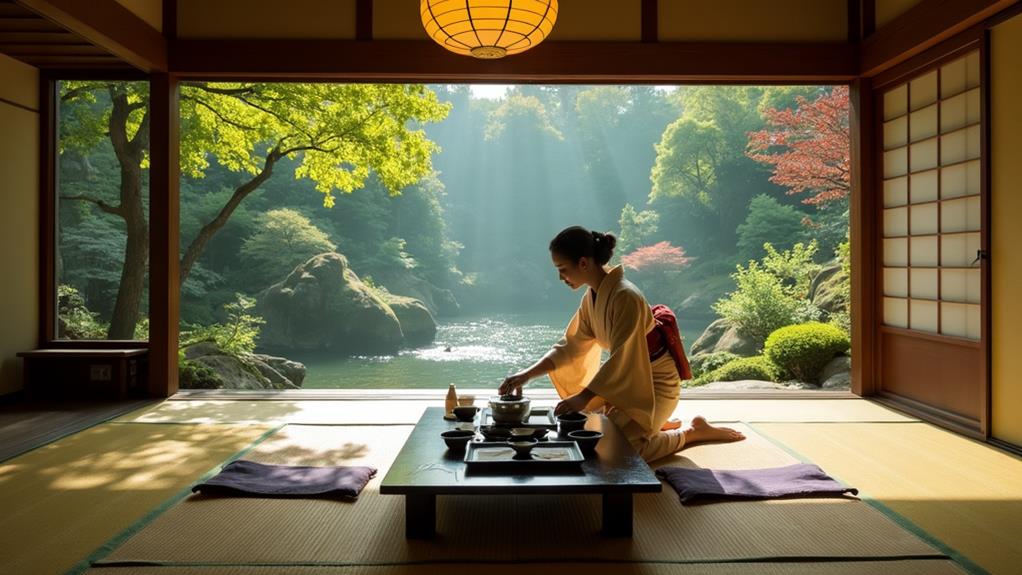
Exploring the cultural significance of tea reveals its profound impact on societies around the world. You'll find that tea is more than just a beverage; it's a central part of many traditions and daily practices. For instance, in Japan, the tea ceremony, or "chanoyu," is a careful tea ritual that emphasizes harmony, respect, purity, and tranquility. Participating in this ceremony allows you to experience a deep sense of mindfulness and appreciation for the present moment.
In England, the concept of "afternoon tea" brings people together for social gatherings. It's a delightful tradition where friends and family bond over cups of tea, finger sandwiches, and scones. This practice has become a cherished part of British culture, symbolizing relaxation and social connection.
China's tea culture, with its rich history, includes numerous tea rituals that highlight the importance of hospitality and respect. When you visit a Chinese home, being offered tea signifies a warm welcome. Meanwhile, in Morocco, mint tea is a staple of hospitality and is often served three times to guests, each with its own significance and meaning.
Understanding these diverse tea rituals and social gatherings can enrich your appreciation of tea's role in connecting people across different cultures.
Frequently Asked Questions
What Health Benefits Are Associated With Drinking Tea?
Drinking tea offers numerous health benefits. It's packed with antioxidant properties that help protect your cells from damage. You'll also find that tea can enhance your mental clarity, helping you focus and stay sharp throughout the day. Regardless of if you prefer green, black, or herbal tea, each type has unique compounds that contribute to comprehensive well-being. So, make a habit of enjoying a cup and reap the rewards.
How Does Water Temperature Affect Tea Flavor?
When you brew tea, water temperature plays an essential role in flavor extraction. If the water's too hot, you'll end up with a bitter taste because it over-extracts the tannins. Conversely, if it's too cool, the flavors won't fully develop, leaving your tea weak. Different teas need different temperatures; for example, green tea requires cooler water than black tea to bring out their best flavors.
Can Tea Leaves Be Reused for Multiple Brews?
Yes, you can reuse tea leaves for multiple brews. Tea steeping for a second or third time often results in a milder flavor, but it can still be enjoyable. The initial steep extracts most of the flavor and antioxidants. However, subsequent brews continue to release subtle notes. Adjusting the steeping time can help balance flavor extraction, ensuring you get the most out of your tea leaves.
What Is the Best Way to Store Tea Leaves?
To guarantee ideal tea storage and freshness preservation, keep your tea leaves in an airtight container. You don't want moisture, light, or air to degrade their quality. Store the container in a cool, dark place, like a pantry or cupboard, away from strong odors. Avoid the fridge, as it can introduce moisture. By following these steps, you'll keep your tea leaves fresh and flavorful for longer.
Are There Any Environmental Impacts Related to Tea Production?
Yes, there are environmental impacts related to tea production. You've got to take into account sustainable farming practices to minimize harm. Pesticide usage can lead to soil and water contamination, affecting local ecosystems. By supporting tea brands that prioritize organic methods and fair trade, you're helping reduce these negative effects. Always check if the tea you buy adheres to sustainable farming practices to guarantee a smaller environmental footprint.