The History of Tea Etiquette and Manners
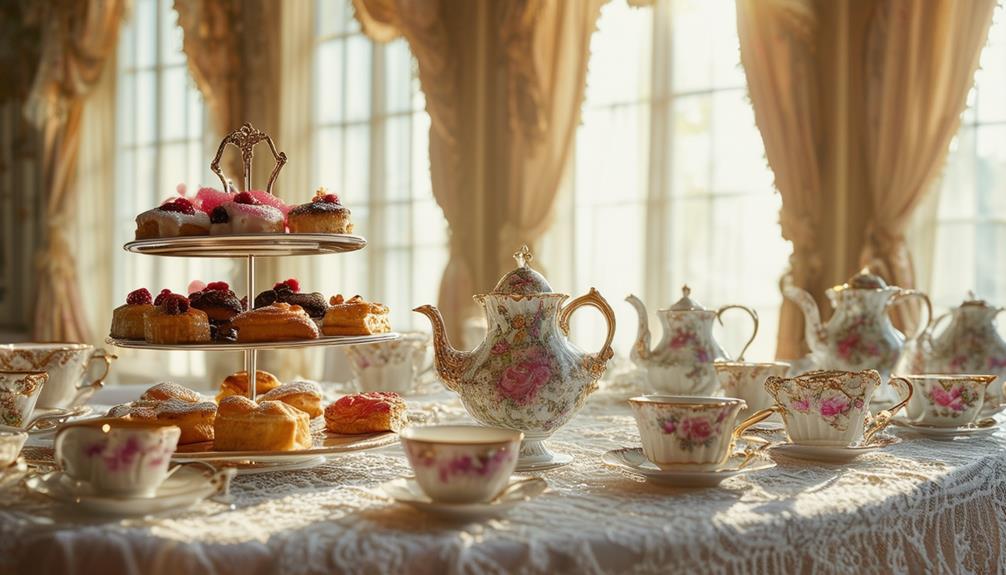
Imagine you're preparing a tea party and want to impress your guests with impeccable manners. The history of tea etiquette and manners dates back to ancient China during the Tang dynasty, where the tea-making process was considered an art form, emphasizing respect and precision. When tea ceremonies reached Japan, they became intertwined with Zen Buddhism, focusing on mindfulness and simplicity. By the Victorian era in England, tea etiquette had evolved into a complex social ritual with its own set of rules. But what exactly were these rituals, and why were they so significant?
Origins of Tea Etiquette
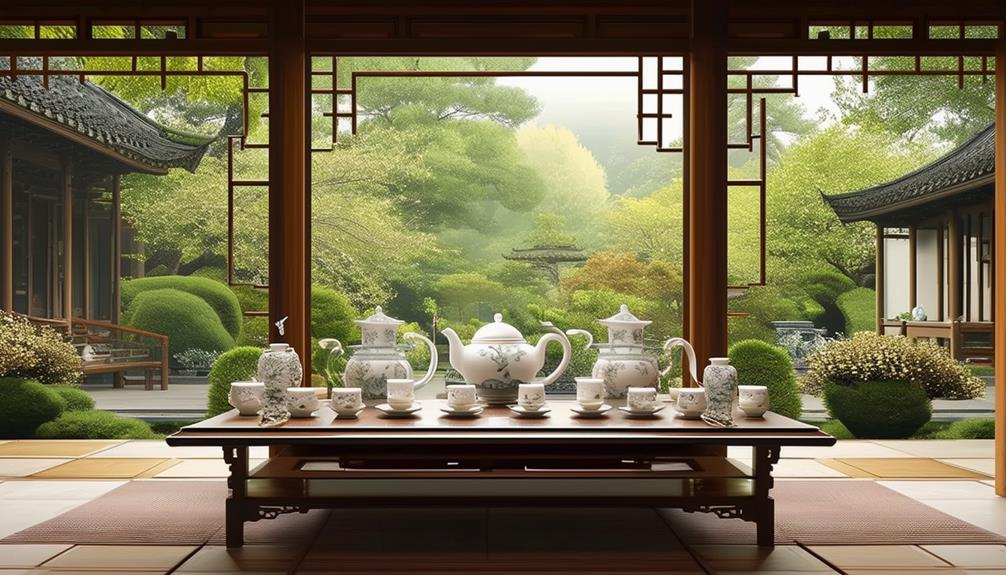
Tea etiquette originated in China during the Tang dynasty, emphasizing respect and precision in tea preparation and serving. This ancient practice was not merely about enjoying a beverage; it was about cultivating mindfulness and respect. The meticulous steps in selecting, preparing, and serving the tea were designed to honor both the tea and the guests.
As tea culture spread, the Japanese tea ceremony, or Chanoyu, elevated these principles. Rooted in Zen Buddhism, Chanoyu involves a highly ritualized process where each movement and gesture is performed with deliberate intention, reflecting profound respect for the art and tradition of tea.
In England, tea etiquette evolved distinctly during the 18th century. The rise of tea gardens and the tradition of afternoon tea became significant social events. Here, tea etiquette focused on proper manners and social decorum, such as holding a teacup delicately and stirring tea quietly, reflecting continued respect for tea-serving traditions. Understanding these origins allows one to appreciate the distinct tea customs across cultures, each emphasizing respect and precision in unique ways.
Victorian Tea Traditions
Victorian tea traditions were a blend of elaborate rituals and stringent rules, emphasizing proper behavior and refined social decorum. Afternoon tea became a cherished social gathering, often transforming into a formal tea party. These events showcased one's etiquette, hospitality, and fashionable attire.
Victorian tea parties featured a beautifully set tea table with an elegant tea service. The table was adorned with dainty, easy-to-eat savory and sweet items, such as sandwiches, cakes, and candies. Cream was a popular addition to tea, enhancing the rich flavor of the brew.
| Tea Table | Etiquette | Activities |
|---|---|---|
| Elegant tea service | Proper attire | Drawing |
| Dainty sandwiches | Hospitality | Dancing |
| Cakes and candies | Specific protocols | Social gathering |
Guests followed specific etiquette rules, ensuring the event ran smoothly. Dressing in fashionable clothing was crucial, as was displaying impeccable manners. Activities like drawing and dancing added an interactive element to the Victorian tea, making it more than just a meal but a lively social experience. By adhering to these traditions, tea parties became a cornerstone of Victorian social life.
Proper Tea-Drinking Manners
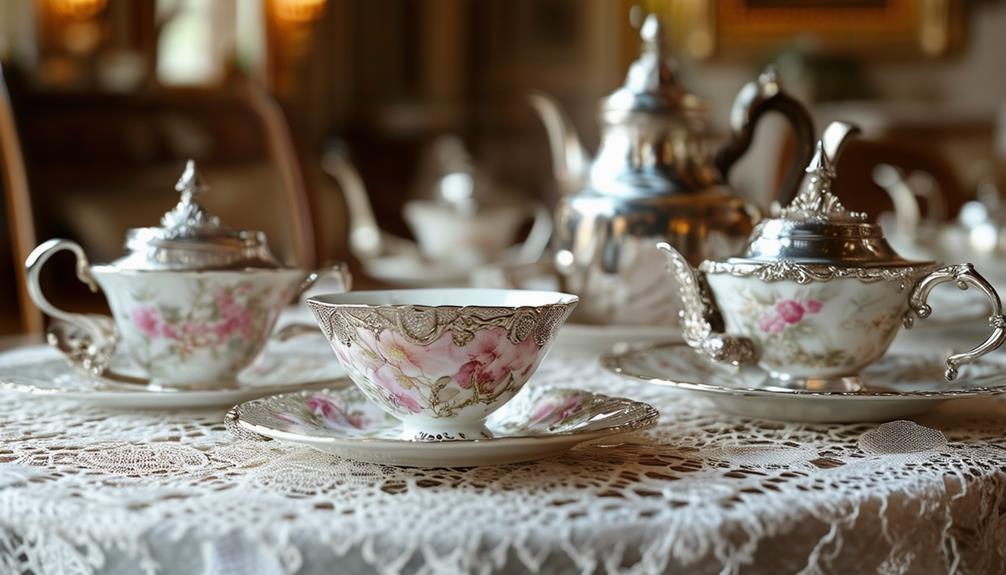
Mastering proper tea-drinking etiquette ensures you'll participate in a tea party with grace and respect. Tea parties, whether casual or formal, require adherence to specific etiquette rules. Here are the key points:
- Handling Your Teacup: Hold the teacup handle with your thumb and fingers to avoid spills or burns. This grip ensures your teacup stays intact under pressure.
- Stirring and Placing Your Spoon: Stir your tea gently without clinking the spoon against the cup. After stirring, place the teaspoon on the saucer to the right of the cup. This gesture demonstrates etiquette awareness.
- Adding Ingredients and Using Napkins: Add sugar first, then lemon, and milk last to your tea. Unfold the napkin and place it on your lap, never using it as a handkerchief. This shows attention to detail.
For scones, spread cream after adding jam. Thinly sliced sandwiches are a staple during high tea, offering a refined touch. Following these etiquette guidelines ensures you'll enjoy the occasion with confidence and poise.
Popular Tea Party Activities
Victorian tea parties were vibrant social events filled with engaging activities. Guests often participated in tasseography, interpreting symbols in tea leaves for insights. Parlor games like charades, word games, and card games added a playful element, fostering lively interactions among attendees. Musical performances were a staple, with guests taking turns to play the piano or sing. Poetry recitations and storytelling also kept everyone entertained. During the Gilded Age, these activities became more elaborate, reflecting the period's opulence.
Creative outlets like flower arranging, painting, or embroidery allowed guests to bond while working on small projects. Educational lectures on etiquette, fashion, or current events sometimes sparked intellectual discussions. When it was time to serve tea, placing your napkin on your chair signaled you would return if you stepped away. Tea was accompanied by small bites, ensuring everyone could savor the experience without feeling too full. These activities made tea parties a cherished social ritual.
Hosting a Victorian Tea Party
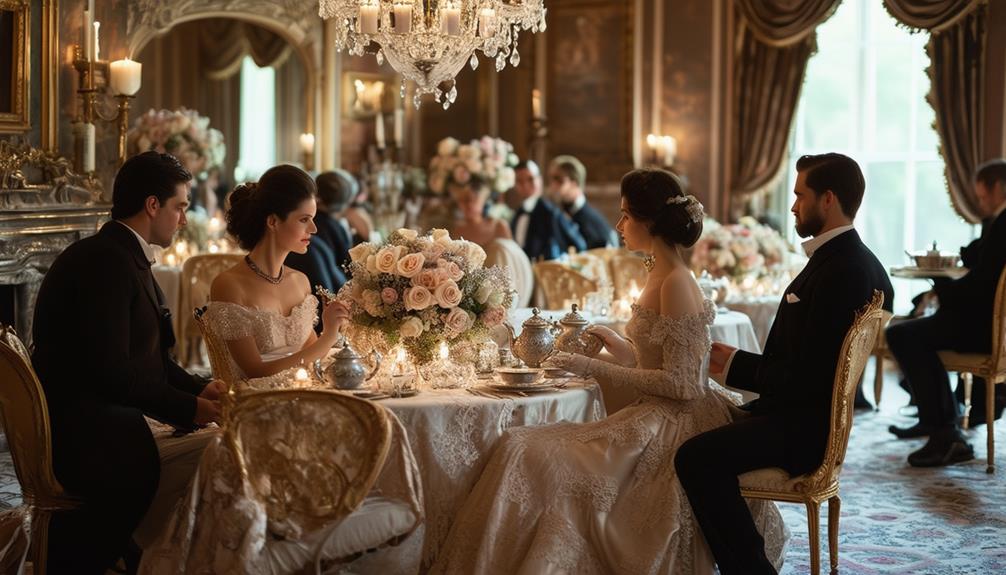
Hosting a Victorian tea party involves embracing the elaborate etiquette and proper manners that characterized these historical gatherings. To achieve an authentic experience, start by focusing on the table setting. Use your best china, ensuring each guest has a matching cup and saucer. The teacup should always be placed on the saucer when not in use.
Key Points to Consider:
- Menu: Offer a variety of dainty, easy-to-eat items such as sandwiches, cakes, and candies. Include traditional accompaniments like jam or curds for an authentic touch.
- Activities: Plan engaging activities such as games, dancing, or drawing sessions. Providing dance cards and small prizes will keep guests entertained and immersed in the Victorian era spirit.
- Etiquette: As the host, demonstrate impeccable manners. Greet each guest warmly, pour tea carefully, and engage in polite conversation. Encourage guests to follow suit, maintaining the decorum expected in a Victorian setting.
Conclusion
Embracing the history of tea etiquette and manners means more than just brewing a cup of tea; it involves honoring traditions that span centuries. From the Tang dynasty in China to Victorian tea parties in England, these customs emphasize respect and mindfulness. By adopting these practices, you enrich your tea-drinking experience and impress your guests with refined social grace. Each sip becomes a part of a time-honored ritual that brings people together.