Japanese Tea Garden San Antonio: History, Culture, and What to See Today
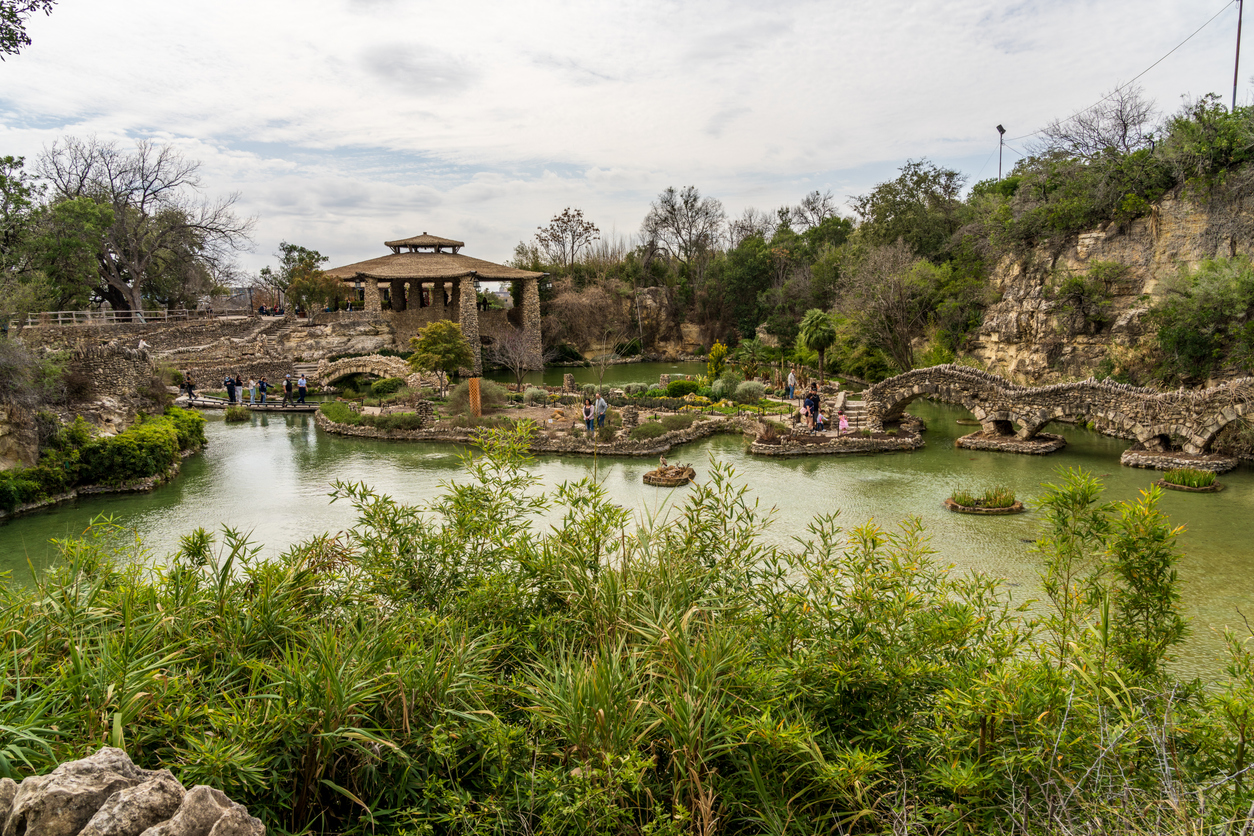
San Antonio’s Japanese Tea Garden is one of the city’s most important cultural and historic landmarks. Located inside Brackenridge Park, the garden blends waterfalls, koi ponds, stone bridges, lush landscaping, and historic architecture with a complicated history tied to immigration, artistry, and wartime discrimination.
What began as an abandoned limestone quarry eventually became a peaceful public garden shaped by Japanese American artist Kimi Eizo Jingu, the Jingu family, Mexican artisan Dionicio Rodríguez, and generations of San Antonio preservation efforts. Today, the site remains one of the city’s most photographed outdoor spaces and a major stop for visitors exploring San Antonio’s cultural history.
From Limestone Quarry to Japanese Tea Garden
Before it became a garden, the site operated as a limestone quarry connected to early cement production in San Antonio. Quarrying activity began in the late 1800s, leaving behind a large pit within what later became Brackenridge Park.
In the 1910s, city leaders began transforming the abandoned quarry into a public garden. Park Commissioner Ray Lambert worked with Japanese American artist and gardener Kimi Eizo Jingu to help shape the landscape into a Japanese-inspired garden featuring ponds, pathways, bridges, stonework, and waterfalls. The site officially opened as the Japanese Tea Garden in the early 20th century and quickly became one of San Antonio’s most distinctive public attractions.
The quarry’s steep limestone walls became a dramatic backdrop for the garden’s winding pathways, shaded corners, and water features, creating a setting unlike most traditional city parks in Texas.
The Jingu Family and the Garden’s Cultural Legacy
The Jingu family became deeply connected to the garden’s identity after Kimi Eizo Jingu and his family moved onto the property as caretakers. The family helped maintain the grounds and welcomed visitors while contributing to the garden’s reputation as a cultural destination.
The family operated a tea room and became closely associated with the garden’s hospitality and Japanese cultural atmosphere. Over time, the garden grew into one of San Antonio’s best-known tourist attractions and a symbol of Japanese American contributions to the city.
The Jingus’ story also reflects the difficult realities faced by many Japanese American families during World War II.
World War II and the Renaming of the Garden
Following the attack on Pearl Harbor during World War II, anti-Japanese sentiment increased across the United States. In San Antonio, the Jingu family was forced to leave the garden property, despite years of stewardship and community involvement.
During this period, the city renamed the site the Chinese Tea Garden. The name change reflected wartime hostility toward Japanese Americans and attempted to distance the attraction from Japanese identity.
The Jingu family eventually relocated to California. Their removal remains one of the most painful chapters in the garden’s history and is now recognized as part of the broader story of discrimination faced by Japanese Americans during the war years.
The Restoration of the Japanese Tea Garden Name
In 1984, San Antonio officially restored the name Japanese Tea Garden during a rededication ceremony supported by city leaders and members of the Japanese American community.
The restoration recognized both the cultural significance of the site and the contributions of the Jingu family. It also helped reconnect the garden with the heritage and artistry that shaped its original identity.
Today, the garden serves not only as a scenic destination but also as a reminder of San Antonio’s multicultural history and the importance of historical acknowledgment and preservation.
Dionicio Rodríguez and the Garden’s Rustic Architecture
One of the garden’s most distinctive artistic features comes from the work of Mexican artisan Dionicio Rodríguez, who became famous for his “faux bois” or trabajo rústico technique. His work used sculpted concrete to imitate natural wood textures, tree branches, logs, and rustic architectural forms.
Throughout the Japanese Tea Garden, visitors can still see Rodríguez’s craftsmanship in:
- Rustic-style benches
- Decorative bridges
- Railings
- Garden structures
- Architectural accents
His work gives the garden a handcrafted appearance that blends naturally with the surrounding stone and vegetation. Rodríguez’s artistic style can also be seen in other historic San Antonio locations, making the garden part of a broader artistic legacy throughout the city.
Waterfalls, Koi Ponds, Bridges, and Scenic Paths
The Japanese Tea Garden remains one of the most visually striking outdoor destinations in San Antonio. Visitors exploring the site today will encounter:
- A dramatic waterfall flowing through the former quarry walls
- Koi ponds surrounded by stone paths
- Arched stone bridges
- Shaded seating areas
- Lush greenery and seasonal flowers
- Elevated viewpoints overlooking the garden
The combination of limestone walls, water features, and layered landscaping creates a peaceful atmosphere that feels separated from the surrounding city.
Photographers often visit during the morning or late afternoon for softer lighting and smaller crowds. The garden is especially popular for portraits, engagement photos, casual photography, and quiet walks through Brackenridge Park.
The Jingu House Café and Visitor Experience
The historic Jingu House area remains an important part of the visitor experience. While the original tea service era tied to the Jingu family is part of the garden’s history, the site now includes the Jingu House Café, where visitors can stop for drinks and light meals while overlooking the garden.
The café and patio area provide one of the best places to relax within the park while enjoying views of the waterfall and ponds below.
Because the garden is free to enter and centrally located near the San Antonio Zoo, Brackenridge Park, and the Witte Museum, many visitors combine several attractions into a single outing.
Planning Your Visit to the Japanese Tea Garden
The Japanese Tea Garden is located at: 3853 N. St. Mary’s Street, San Antonio, Texas
The garden is free and open to the public daily through San Antonio Parks & Recreation. Visitors should check current operating hours before arriving, especially around holidays or severe weather.
Helpful tips for visiting:
- Wear comfortable shoes for uneven stone pathways and stairs
- Visit early in the day for cooler temperatures and lighter crowds
- Bring a camera for scenic overlooks and water features
- Combine your visit with nearby Brackenridge Park attractions
- Allow extra time to explore pathways and shaded seating areas
Parking is available near the garden, though weekends and holidays can become crowded.
Why the Japanese Tea Garden Remains One of San Antonio’s Most Important Cultural Sites
The Japanese Tea Garden is more than a scenic park attraction. It reflects San Antonio’s layered cultural history through Japanese American heritage, Mexican artistry, landscape preservation, public park development, and community memory.
Its story includes beauty, craftsmanship, resilience, and historical injustice, all preserved within one of the city’s most peaceful public spaces. Visitors today experience not only waterfalls and gardens, but also a place tied to generations of San Antonio history.
Conclusion
San Antonio’s Japanese Tea Garden remains one of the city’s most recognizable and culturally significant outdoor destinations. From its origins as a limestone quarry to its transformation into a garden shaped by the Jingu family and Dionicio Rodríguez, the site combines history, art, and nature in a way few places in Texas can match.
Whether you visit for photography, architecture, quiet walking paths, or cultural history, the garden offers one of the most memorable experiences inside Brackenridge Park.