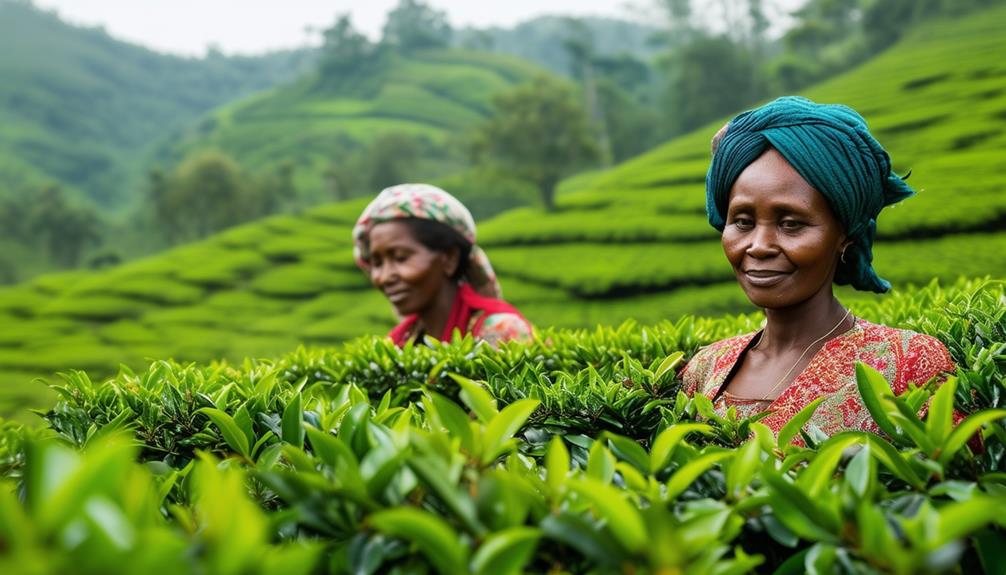
The History of Ceylon Tea: Sri Lanka’s Tea Industry
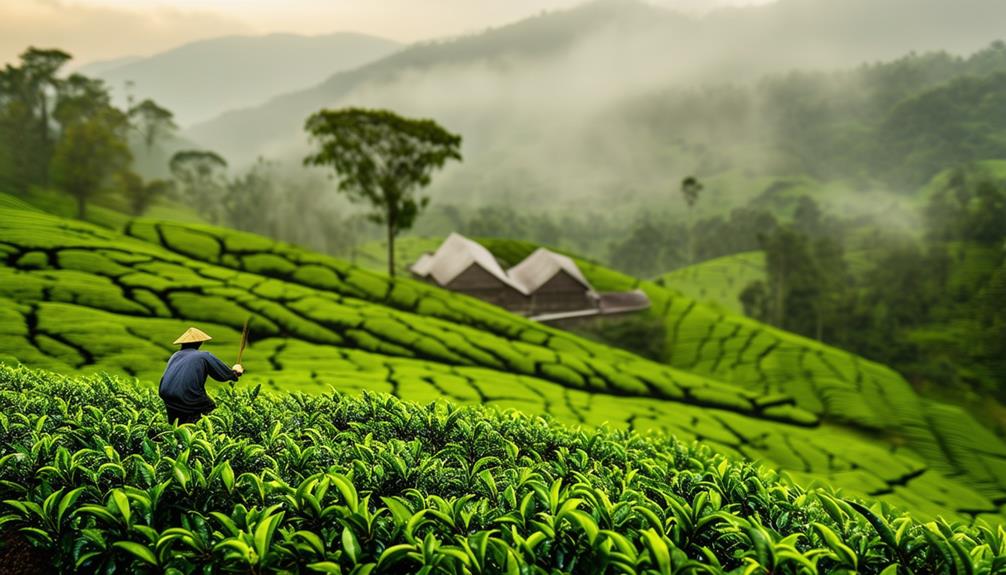
When you think about Ceylon Tea, you're tapping into a rich history that began with James Taylor's visionary work in 1867. His initial planting of tea bushes and the establishment of the pioneering tea factory in 1872 laid the foundation for Sri Lanka's transformation into a global tea powerhouse. This progression from humble beginnings to becoming the world's largest tea exporter by 1965 is marked by significant developments and milestones. But what exactly fueled this meteoric rise, and how did Taylor's legacy shape the industry as it stands today? Let's explore the pivotal moments that defined this iconic beverage's remarkable story.
Early Beginnings

In 1867, James Taylor planted the first tea bushes in Ceylon, marking the beginning of the island's tea industry. Taylor's dedication led to the establishment of the first tea factory in 1872, enabling the commercial production of Ceylon tea.
By 1875, the first shipment of Ceylon tea reached a London auction, introducing the island's tea to the global market and establishing its reputation for quality. The industry grew rapidly, with production surpassing 100,000 metric tons by 1927.
Sri Lanka (formerly Ceylon) continued to expand its tea production, becoming the world's largest tea exporter by 1965. James Taylor's pioneering efforts and the establishment of the first tea factory laid the foundation for Sri Lanka's thriving tea industry, which remains a significant player in the global market.
James Taylor's Legacy
James Taylor's legacy is pivotal in shaping the history of Ceylon tea. He pioneered commercial tea cultivation in 1867 and established the first tea factory in Loolecondera in 1872. Taylor's groundbreaking efforts paved the way for Sri Lanka to become a leading global tea producer.
Pioneering Tea Cultivation
James Taylor revolutionized Sri Lanka's agriculture by pioneering commercial tea cultivation in 1867. At the Loolecondera estate, he planted the initial tea seedlings that would transform the country's economy. Taylor's efforts didn't stop there; in 1872, he established Sri Lanka's first tea factory, setting the stage for large-scale production. His innovative methods and dedication resulted in the initial export of Ceylon tea to London's tea auction in 1875. This move not only marked a significant milestone but also showcased the potential of Ceylon tea on the global stage.
Taylor's legacy is rooted in his pioneering spirit and commitment to commercial tea cultivation. His work laid the groundwork for a thriving industry. By exporting high-quality Ceylon tea, he secured the product's popularity and success abroad. This period marked the beginning of Sri Lanka's evolution towards becoming one of the world's leading tea exporters. Taylor's contributions were instrumental in shaping the future of the tea industry, making Ceylon tea synonymous with quality and excellence. His influence is still felt today, as Sri Lanka continues to be a key player in the global tea market.
Establishing Tea Estates
Building on his pioneering efforts, James Taylor's establishment of tea estates solidified the foundation for Sri Lanka's burgeoning tea industry. Taylor didn't just introduce commercial tea cultivation; he meticulously developed the necessary infrastructure for its success. By 1867, Taylor had set up the initial tea estate in Loolecondera, which became the cornerstone of his legacy. His hands-on approach and innovative methods led to the creation of the first tea factory in 1872, revolutionizing tea processing and packaging.
The success of these tea estates was evident when the first Ceylon tea shipment was sent to the London tea auction in 1875. This pivotal moment marked Ceylon tea's entry into the global market, showcasing the quality and potential of Sri Lankan tea. Taylor's legacy extended beyond Loolecondera, sparking a wave of growth across the island and transforming Sri Lanka into a major player in the global tea industry.
Legacy in Tea Production
James Taylor's pioneering spirit and significant contributions to Sri Lanka's tea industry have left an indelible mark on global tea production. A Scotsman, Taylor initiated commercial tea cultivation in Ceylon in 1867, laying the groundwork for what would become a worldwide phenomenon. His relentless efforts led to the establishment of the first tea factory in Loolecondera in 1872, a milestone that streamlined the production process and improved the quality of Ceylon tea.
Taylor's legacy is multifaceted. He not only spearheaded commercial tea cultivation but also initiated the first shipment of Ceylon tea to the London auction in 1875. This pivotal move expanded the global reach of Ceylon tea, positioning Sri Lanka as a key player in the international tea market. His contributions laid the foundation for the infrastructure that enabled Sri Lanka to become the world's largest tea exporter by 1965.
Three key aspects of Taylor's legacy are:
- Pioneering Commercial Cultivation: Introduced and perfected tea cultivation in Ceylon.
- Infrastructure Development: Established the first tea factory, enhancing production efficiency.
- Global Expansion: Initiated international trade, making Ceylon tea a global export.
The First Tea Factory
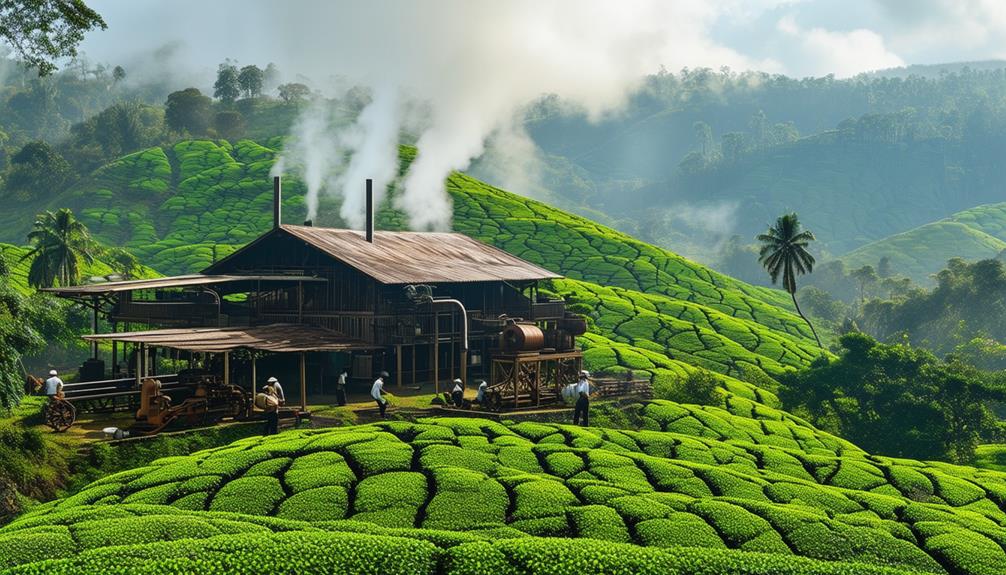
In 1872, the establishment of the first tea factory at Loolecondera estate marked the beginning of commercial tea production in Ceylon. This pivotal moment was orchestrated by James Taylor, whose pioneering efforts were crucial in transforming the region's agricultural landscape. Taylor's creation of the initial tea factory provided the necessary infrastructure for processing and packaging, essential steps in preparing Ceylon tea for export to international markets.
By setting up this factory, Taylor positioned Ceylon to become a major tea-exporting country. The factory at Loolecondera estate not only processed tea but also standardized its quality and consistency, ensuring that Ceylon tea could compete on a global scale. This innovation was key to the growth of the Ceylon tea industry.
James Taylor's vision and dedication laid the foundation for the immense success of the Ceylon tea industry. His pioneering efforts at Loolecondera estate sparked a transformation, setting in motion an industry that would flourish and become synonymous with quality and excellence. The first tea factory was not just a building; it was the birthplace of an industry that would grow and thrive for generations.
Global Market Rise
The ascent of Ceylon tea into a global market leader began with its significant rise in export volumes, peaking in 1965 when Sri Lanka became the world's largest tea exporter. By 1927, the industry had already marked a milestone with exported production exceeding 100,000 metric tonnes, showcasing its commitment to quality and growth.
To meet the increasing demand, substantial infrastructure improvements were made. This included the modernization of tea factories, enhancement of transportation networks, and strategic marketing initiatives, all of which were crucial in boosting Sri Lanka's tea exports. Consequently, Ceylon tea earned a reputation for quality and reliability, cementing its position in the global market.
Today, Ceylon tea continues to hold a significant share of the global market, accounting for 10% of the world's tea demand. Sri Lanka's tea industry remains robust, maintaining its status as a key player on the international stage.
Three key factors contributed to this global market rise:
- Exponential rise in export volumes: Rapid growth in production and demand.
- Infrastructure development: Modernization of facilities and transportation.
- Enduring legacy: Consistent quality and global recognition.
Production Milestones
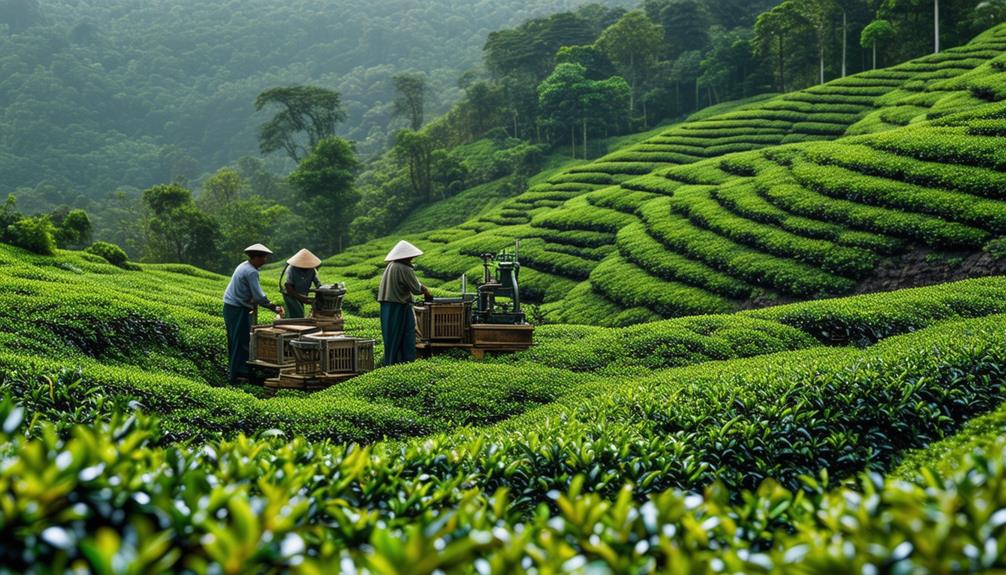
Let's examine the key milestones that shaped Ceylon Tea production. Early plantations, the introduction of mechanization, and a focus on efficiency significantly expanded the global market, solidifying Sri Lanka's position as a leading tea producer.
Foundational Plantations Era
James Taylor's pioneering efforts in 1867 marked the beginning of Ceylon's significant advancements in tea cultivation. By establishing the initial tea estate, Taylor set the foundation for a burgeoning industry. He further revolutionized tea processing by opening the first tea factory in 1872, which propelled Ceylon's tea production to unprecedented levels.
Entering the 20th century, the industry saw remarkable growth. By 1927, Ceylon's tea production surpassed 100,000 metric tons, reflecting its rapid development. The Colombo Tea Auction, initiated in 1883, was instrumental in integrating Ceylon into the global tea market, becoming a crucial hub for tea trade and enhancing Ceylon's global reputation.
Key milestones during the foundational plantations era include:
- Establishment of the First Tea Estate: Initiated by James Taylor in 1867.
- Opening of the First Tea Factory: Launched by James Taylor in 1872.
- Inception of the Colombo Tea Auction: Began in 1883, facilitating global trade.
Mechanization and Efficiency
The introduction of the first tea-rolling machine in 1880 marked a significant leap in efficiency for tea production in Ceylon. This mechanization enabled faster and more consistent rolling of tea leaves, directly boosting production capabilities. By 1884, the establishment of the Central Tea Factory further advanced these capabilities, offering a centralized processing location that enhanced production efficiency.
By 1927, the impact of these advancements was evident, as Ceylon's tea production exceeded 100,000 metric tons. The industry's commitment to efficiency continued with research into vegetative propagation in 1938, aimed at improving the quality and quantity of tea plants. This scientific approach ensured better yields and more robust plants, significantly enhancing cultivation efficiency.
Additionally, the creation of the pioneering Ceylonese tea broking house in 1941 revolutionized trading and distribution processes. This innovation streamlined trading efficiency, facilitating the global distribution of Ceylon tea. These milestones in mechanization and efficiency collectively shaped a robust and efficient tea industry in Ceylon, laying a strong foundation for its future growth.
Global Market Expansion
In 1965, Sri Lanka solidified its status as the world's largest tea exporter, reflecting the global expansion and booming demand for Ceylon tea. This milestone confirmed the island's ability to meet escalating production demands. To sustain this growth, Sri Lanka expanded its tea cultivation regions to include Uva, Ruhuna, and Dimbula, which became essential in enhancing overall tea production and maintaining the country's leading position in the global market.
The development of the upcountry railway system was another crucial factor supporting export growth. This infrastructure enabled the efficient transportation of tea from remote plantations to ports, facilitating quicker and larger-scale exports. Consequently, Ceylon tea became a household name worldwide, and Sri Lanka solidified its reputation as the world's largest exporter.
Key points illustrating the success of this global market expansion include:
- By 1927, Ceylon tea production had surpassed 100,000 metric tons, marking a significant production milestone.
- Ceylon tea now satisfies 10% of the world's tea demand, underscoring its enduring legacy.
- The expansion into Uva, Ruhuna, and Dimbula regions helped meet growing global production demands.
Through strategic expansion and infrastructure development, Sri Lanka's tea industry continues to thrive on the global stage.
Modern Day Ceylon Tea
Today, Sri Lanka's tea industry robustly fulfills approximately 10% of the global tea demand. Modern Ceylon tea thrives due to the dedicated efforts of organizations such as the Ceylon Tea Traders Association and the Sri Lanka Tea Board. With production surpassing previous records, Sri Lanka's tea industry has expanded into regions like Uva, Ruhuna, and Dimbula.
Sri Lankan tea plantations are celebrated for producing high-quality tea that appeals to both casual drinkers and tea connoisseurs. Whether you enjoy a simple morning cup or a premium blend, Ceylon tea offers a variety of choices. The global demand for tea remains strong, and Sri Lanka's tea industry meets this demand with excellence and consistency.
Exploring contemporary Ceylon tea, you will find that its legacy as a globally recognized and cherished beverage remains intact. From lush tea gardens to your cup, the journey of Sri Lankan tea reaffirms its enduring quality and appeal in today's market.
Future Prospects

Continuing its rich legacy, Sri Lanka's tea industry is poised to embrace the future with a focus on sustainability and innovation. Committed to maintaining its status as one of the world's largest tea exporters, the industry prioritizes high standards of quality and eco-friendly practices to meet the rising global demand.
Here are three key strategies shaping the future of Sri Lanka's tea industry:
- Integration of Advanced Farming Practices and Technology: By incorporating modern technology and innovative farming methods, the industry aims to enhance both productivity and quality. This includes the use of precision agriculture, automated processing, and sustainable farming techniques.
- Market Expansion and Product Diversification: To foster growth, Sri Lanka is exploring new markets and diversifying its tea offerings. This involves creating unique blends and value-added products to meet diverse consumer preferences worldwide.
- International Collaboration: Strengthening partnerships with global collaborators will help promote Ceylon Tea and expand market reach. These collaborations are crucial for increasing visibility and ensuring a robust presence in international markets.
With these strategies, Sri Lanka's tea industry is well-positioned to thrive in the evolving global landscape.
Conclusion
You've now delved into the rich history of Ceylon Tea, from James Taylor's pioneering efforts to Sri Lanka's present-day status as a global tea industry leader. This legacy of innovation and excellence continues to shape the industry. As you enjoy your next cup of Ceylon Tea, remember the remarkable journey behind it and anticipate the exciting future of this timeless beverage. Here's to the enduring allure of Ceylon Tea!