The Development of Tea Bags: From Invention to Popularity
Imagine you're enjoying a cup of tea and think about how much easier it is thanks to tea bags. The journey began with Thomas Sullivan's accidental invention in 1908, when he used silk pouches for brewing. This eventually led to the more practical paper designs of the 1930s. But how did we evolve from those early silk bags to the convenient, modern tea bags we use today? Brands like Tetley and Lipton played pivotal roles in this transformation. What were the key innovations, and how did they shape our tea-drinking habits? Let's explore the evolution of the tea bag.
The Accidental Invention

Sometimes the best inventions happen by accident, and that's exactly how tea bags came to be. In 1908, Thomas Sullivan, a New York tea merchant, sent samples of his tea to customers in small silk pouches. His intention was merely to provide a convenient way to package the tea, but his customers had other ideas. They didn't open the pouches; instead, they brewed their tea with the leaves still inside. This accidental creation led to a simpler brewing method that quickly caught on.
Recognizing the potential, Sullivan began commercial production of purpose-made tea bags, designed specifically for brewing tea without the mess of loose leaves. This newfound convenience revolutionized tea-drinking habits. People no longer needed to fuss with tea strainers or loose leaves, making the process quicker and cleaner.
Sullivan's innovation sparked widespread change in how tea was consumed. The tea bag's ease of use led to its rapid adoption, turning tea-drinking from a sometimes cumbersome ritual into a straightforward, everyday activity. This accidental invention didn't just simplify tea brewing; it transformed it, paving the way for the modern tea bags we use today.
Early Silk Bags
Thomas Sullivan's early silk tea bags, initially intended merely as samples, became the foundation for modern tea bags. In 1908, Sullivan, a New York tea merchant, sent out loose tea samples in small silk pouches. Instead of opening the pouches and pouring the tea into a pot, customers immersed the entire silk bag into hot water. This led to the accidental invention of tea bags.
Sullivan's customers were pleasantly surprised by how easy it was to brew tea using the silk pouches, eliminating the mess of loose tea leaves. The convenience and efficiency of the silk tea bags naturally intrigued customers. Recognizing the potential, Sullivan refined his silk tea bags, paving the way for their mass production.
These early silk tea bags were revolutionary, transforming the tea-drinking experience by making it more accessible and less cumbersome. Thanks to Sullivan's innovative approach to distributing loose tea samples, tea bags quickly gained popularity and became a staple in households worldwide.
Transition to Paper
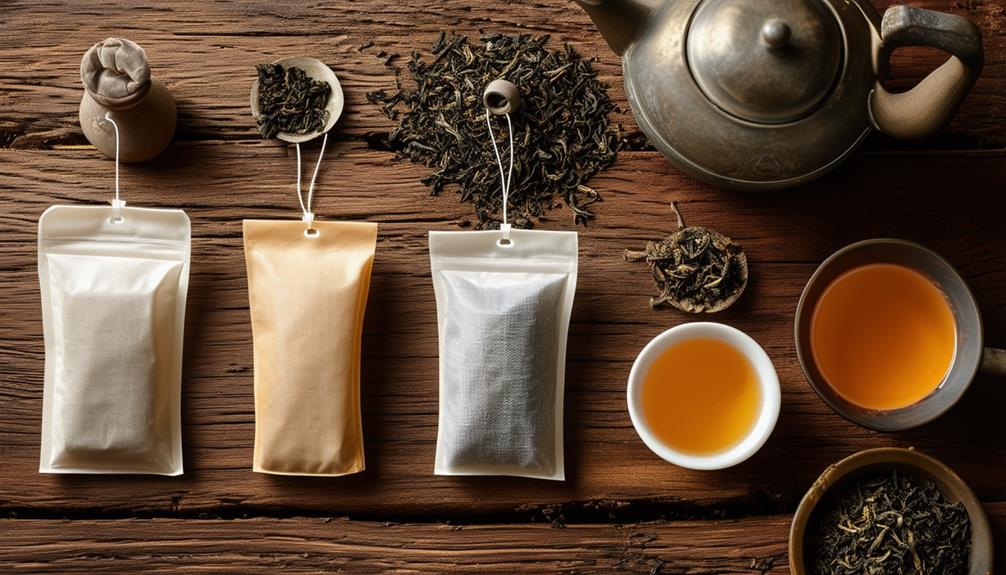
The switch to paper tea bags in the 1930s significantly transformed the tea industry. Early advancements in paper materials and manufacturing made tea bags more affordable and efficient. We will explore how these innovations, along with their environmental impacts, helped shape the modern tea bag.
Early Paper Materials
The transition to paper materials in the 1930s revolutionized tea consumption by making brewing more convenient and cost-effective. Previously, tea bags were constructed from silk or gauze, but the introduction of filter paper provided several advantages. Filter paper allowed water to pass through while containing the tea leaves, making tea bags more affordable and practical for everyday use.
This innovation simplified the tea brewing process, making it accessible to a broader audience and encouraging mainstream adoption. With paper tea bags, anyone could enjoy a perfect cup of tea without the need for loose leaves or complicated brewing equipment. The affordability and ease of mass production of paper tea bags further contributed to their widespread distribution and popularity.
The shift to paper materials was transformative, creating a culture where brewing tea became quick, easy, and efficient. This change significantly contributed to the widespread popularity and mainstream adoption of tea bags, solidifying their place in households around the world.
Manufacturing Process Innovations
Innovations in manufacturing processes during the 1930s facilitated the widespread adoption of paper tea bags, establishing them as household staples globally. The transition from silk and gauze to filter paper was revolutionary. Filter paper allowed water to permeate while retaining tea leaves, significantly enhancing the practicality and cost-efficiency of tea bags.
| Key Players | Innovation Period | Impact |
|---|---|---|
| Tetley | Late 1930s | Improved convenience |
| Lipton | 1950s | Enhanced accessibility |
| Various Brands | 1930s Onwards | Economical production |
The introduction of paper tea bags was transformative for the tea industry. Early adopters such as Tetley and Lipton began using paper tea bags in the late 1930s and 1950s, respectively. Their initiatives made tea bags more accessible and affordable, contributing to their widespread popularity.
This new manufacturing process reduced costs and streamlined the packaging and distribution of tea. It enabled consumers to enjoy a cup of tea without the need to measure loose leaves, significantly increasing the convenience of tea preparation. The adoption of paper tea bags marked a pivotal advancement, cementing their role as an essential household item.
Environmental Impact Considerations
Switching to paper tea bags in the 1930s not only reduced costs but also significantly decreased environmental impact. At a time when silk and gauze bags were common, paper tea bags emerged as a more affordable and environmentally friendly alternative. The shift to filter paper brought notable advantages, including better infusion and brewing. Unlike silk, paper tea bags are biodegradable and compostable, breaking down naturally and contributing less to landfill waste.
By adopting paper tea bags, you contribute to waste reduction and promote sustainability. These bags are designed to be compostable, allowing for eco-friendly disposal. The use of biodegradable materials in tea bags helps lessen the environmental impact associated with traditional non-biodegradable options, making your tea-drinking habits more eco-friendly.
The transition to paper tea bags marked an important step in improving the sustainability of tea bag production and disposal. As a result, you can enjoy your tea knowing that you're making a positive environmental impact. Embracing these environmentally friendly options reflects a commitment to a greener, more sustainable future.
Tetley's Innovation
Tetley revolutionized the British tea market in 1953 by introducing tea bags, a convenient alternative to loose leaf tea. This innovation significantly changed tea consumption habits across the UK. Before Tetley's introduction, making tea involved measuring and steeping traditional loose leaf tea, which many found cumbersome.
With Tetley's tea bags, there was no need for tea strainers or dealing with leftover leaves. This convenient method made brewing tea quicker and easier, perfectly aligning with the busy lifestyles of the time. Despite initial resistance, the practicality of tea bags began to gain traction. By the early 1960s, tea bags comprised less than 3% of the British market, but Tetley's persistent efforts were crucial in popularizing them.
Over time, more Brits adopted this easier method of enjoying tea, leading to the widespread adoption of tea bags. By 2007, 96% of the British tea market consisted of tea bags, showcasing Tetley's significant impact on tea consumption habits. Thanks to Tetley, enjoying a perfectly brewed cup of tea now requires minimal effort.
Lipton's Contributions
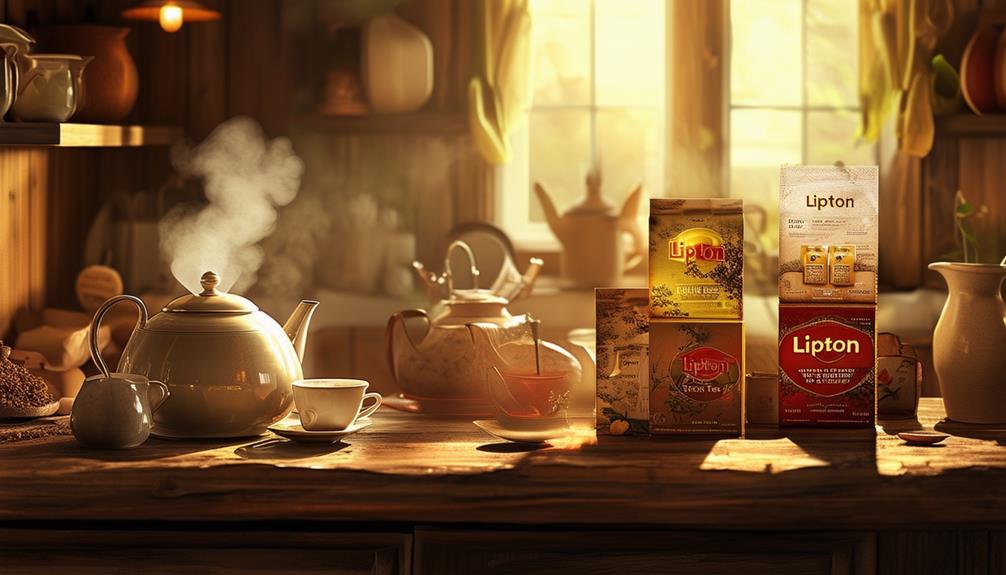
Lipton revolutionized the tea industry in 1952 by introducing the Flo-Thru bag design. This innovative tea bag significantly enhanced the brewing process by optimizing water flow through the tea leaves, resulting in a richer and more flavorful cup of tea. The advanced design eliminated the need for complex brewing techniques, ensuring convenience and consistency in every cup.
The Flo-Thru bag not only improved tea quality but also simplified tea preparation. Consumers no longer had to deal with the mess of loose tea leaves or fiddly infusers. This mess-free, efficient brewing method made it easier for people to incorporate tea into their daily routines.
Lipton's Flo-Thru bags quickly gained mainstream acceptance, making high-quality tea accessible and easy to prepare. By simplifying the tea-making process and enhancing the overall experience, Lipton played a crucial role in popularizing tea consumption. Thanks to Lipton's innovation, enjoying a perfect cup of tea became a more convenient and enjoyable experience for everyone.
Modern Designs
Building on Lipton's groundbreaking work, modern tea bags have evolved to incorporate innovative designs that enhance the tea-drinking experience. One of the most notable advancements is the pyramid-shaped bag. This unique design provides more space for tea leaves to expand, resulting in better flavor extraction and a more robust brew. This allows you to fully savor the richness of your tea.
Modern designs also prioritize material quality. Heat-sealed paper bags with strategic creases have become standard, ensuring efficient brewing and minimizing mess. The growing use of eco-friendly materials like corn fiber and compostable mesh caters to those seeking sustainable options without compromising quality.
Advanced airflow designs represent another significant development. These designs improve infusion and flavor release, ensuring a more consistent and enjoyable cup of tea. With these modern innovations, tea bags have transformed from simple sachets into sophisticated brewing tools.
Environmental Impact
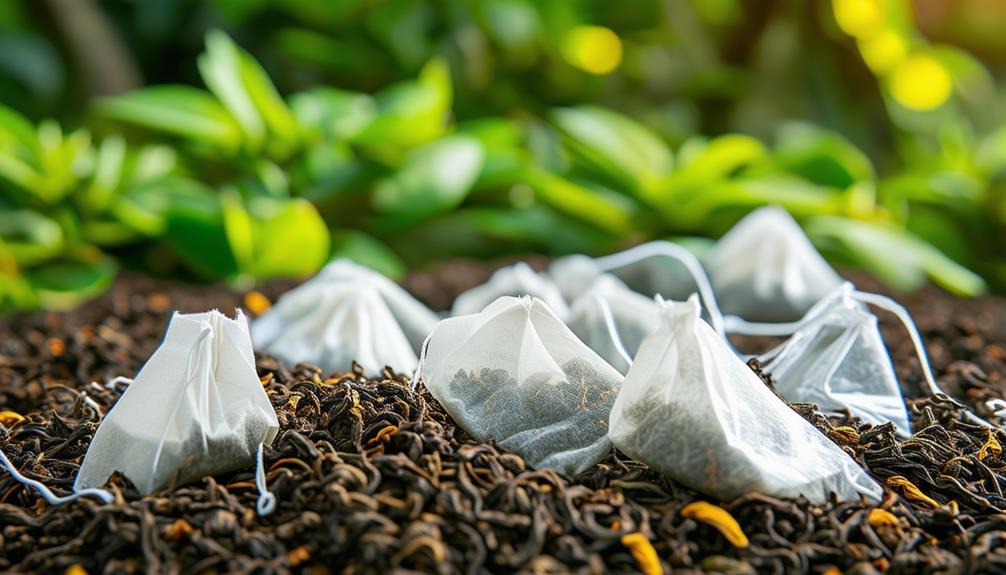
The environmental impact of traditional tea bags is often underestimated, primarily due to their plastic-derived polypropylene content. This material is used for heat-sealing and is non-biodegradable, resulting in long-term waste accumulation. Many consumers may not realize the negative environmental consequences associated with their daily tea habits.
| Material | Environmental Impact |
|---|---|
| Plastic-derived Polypropylene | Significant, non-biodegradable |
| Cornstarch-Based | Minimal, compostable and biodegradable |
| Compostable Mesh | Minimal, fully compostable |
| Paper with No Plastic | Low, biodegradable |
To mitigate these issues, the tea industry is increasingly adopting more sustainable alternatives. Compostable mesh tea bags, often made from cornstarch, are gaining popularity as they are fully biodegradable and compostable, aligning well with environmental sustainability goals.
Cultural Influence
While the push for more sustainable tea bags addresses their environmental impact, it is crucial to recognize how profoundly tea bags are woven into the cultural fabric of societies worldwide. They have become an essential part of daily rituals and social gatherings, offering a convenient method to enjoy tea without compromising quality or experience.
Tea bags have revolutionized the tea industry by simplifying the tea-drinking process. They eliminate the need for loose leaves, strainers, or elaborate preparations, making them indispensable in events like Afternoon Tea. This convenience complements long-standing traditions, reinforcing their cultural significance.
The cultural influence of tea bags extends beyond mere convenience. They reflect the evolution of tea consumption habits globally, from the sophisticated tea rooms of Britain to casual office tea breaks. By making tea drinking more accessible and enjoyable, tea bags have cemented their place in the history and culture of tea.
Conclusion
The journey of tea bags began with Thomas Sullivan's accidental invention, which revolutionized tea culture. Initially crafted from silk pouches, tea bags evolved into paper designs in the 1930s, with brands like Tetley and Lipton popularizing their use. Modern innovations continue to enhance convenience and address environmental concerns. Tea bags have simplified brewing and made a lasting cultural impact. So, next time you brew a cup, remember the evolution of the humble tea bag.