Texas Tea Rooms That Keep Tradition Alive

Texas tea rooms offer more than just a spot for afternoon tea—they're living museums where you'll experience Prohibition-era elegance alongside regional culinary traditions. You'll find these establishments housed in carefully preserved landmark buildings, serving multi-tiered trays with both British-inspired classics and Texan specialties. Women entrepreneurs have historically shaped these spaces as centers for community gathering and social change. Step inside these time capsules to taste history while supporting a cherished cultural institution.
Historic Buildings With Stories to Tell: Texas Tea Rooms in Landmark Spaces
As you sip your tea, you're surrounded by historic preservation efforts that maintain not just architecture, but community legacy. In Carthage, the restored bank building that houses the Texas Tea Room also includes museum spaces with exhibits that can feature Caddo Indian history and Civil War-era displays, creating an experience that goes beyond dining. Across Texas, landmark buildings find new life through adaptive reuse, from Tea at The Adolphus in downtown Dallas to seasonal tea service at Fort Worth’s The Ashton Depot and garden-setting teas at the Dallas Arboretum’s DeGolyer Tea Room. Many of these tea rooms are housed in historic hotels, depots, and heritage venues that have been carefully restored to their former glory. These spaces preserve architectural treasures while creating unique venues where history and hospitality blend seamlessly.
From Prohibition to Present: The Evolution of Texas Tea Room Culture
View this post on Instagram
The heritage of Texas tea rooms extends beyond preserved architecture into a fascinating social timeline. When Prohibition shuttered saloons across the state in 1920, you'd have witnessed a remarkable Prohibition-era surge as tea rooms and similar alcohol-free eateries filled the void, offering respectable gathering spaces, particularly for women seeking independence. These establishments thrived as social centers where college students studied and socialized, sometimes drawing criticism from older generations. Many tea rooms featured dainty tea sandwiches and elaborate tiered serving trays that became signature elements of the afternoon tea experience. After 1933, post-Prohibition adaptations kept tea rooms relevant - they expanded menus beyond tea service and often evolved into broader lunch and dinner spots while maintaining their charm. Today, you'll find these cultural landmarks serving both locals and tourists, operating as living museums that honor their temperance-era associations while contributing to local economies through heritage tourism.
Heritage on a Plate: Traditional and Regional Tea Room Menus
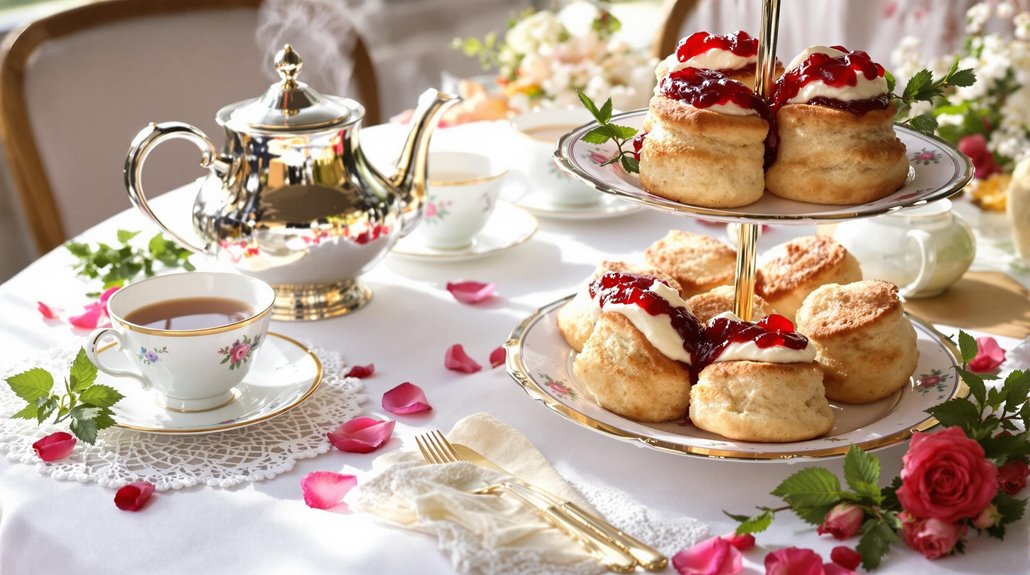
Many Texas tea rooms serve heritage quite literally—on delicate china plates and elegant tiered stands. You'll find afternoon tea services featuring multi-tiered food towers that balance savory finger sandwiches with sweet scones and pastries, all reflecting the state's unique culinary identity. The tea selection itself spans from classic Earl Grey to specialty blends like turmeric ginger. Everything's scratch-made and portioned for sharing, creating an experience that honors British tradition while celebrating Texas's rich culinary heritage. Many establishments offer homemade scones served warm with jam and clotted cream as a centerpiece of their traditional offerings. What sets Texas tea rooms apart are their distinctive flavor profiles. Local seasonal ingredients transform traditional offerings—garden-fresh salads incorporate pecans and berries with curry mayonnaise, while signature dishes can include whiskey-sauced beef medallions or Creole-inspired salmon. Even Mediterranean-inspired wraps and flatbreads get Texan makeovers with regional spices.
Women's Enterprise and Social Change: The Community Impact of Tea Rooms
Texas tea rooms represent far more than quaint dining establishments—they've been powerful vehicles for women's economic empowerment and social change. In a state known for strong female entrepreneurship, these venues have historically offered women opportunities to own and operate businesses when other industries remained closed to them. These community gathering spaces have served dual purposes: welcoming rooms where women could network professionally while also functioning as marketplaces for local artisans. With women-led ownership and women-centered staffing in many early tea rooms, these spaces challenged social expectations while boosting local economies through employment and tourism. Though typically smaller in scale than many male-owned enterprises of their era, these tea rooms have contributed substantially to Texas's cultural landscape, preserving traditions while advancing women's economic independence and social influence. The business-friendly climate of Texas has allowed many women-owned establishments to flourish and expand their reach over time.
Architectural Preservation Meets Modern Hospitality in Today's Tea Rooms
View this post on Instagram
Stepping into a historic Texas tea room, you'll witness an artful balance of past and present where former bank buildings and Victorian homes have found new life as elegant dining establishments. These spaces seamlessly blend brass fittings and lacquered wood with discreet modern amenities. Adaptive reuse challenges include maintaining structural integrity while meeting health codes. You'll find original bank vaults transformed into private dining nooks and vintage teapots displayed alongside subtle climate control systems. Hospitality innovation emerges in flexible layouts that accommodate both intimate tea service and community events. The Texas Tea Room exemplifies this trend, being situated in the restored 1903 Bank of Carthage building that later served as the First National Bank building. When you visit places like Carthage's Texas Tea Room, or reserve a seated tea at venues like The Adolphus or the DeGolyer Tea Room, you're experiencing more than a meal—you're participating in heritage tourism where Colonial Revival aesthetics and local history blend with contemporary comfort in a perfect preservation symphony.
Related posts