
How Is Tea Made?

Tea is made through a precise process that starts with handpicking the best leaves, usually early in the morning. These leaves are then withered to reduce moisture, followed by rolling to release crucial oils. Oxidation takes place next, determining the tea's flavor and color. Afterward, the leaves are dried either by sun or machine to remove remaining moisture. Ultimately, the dried leaves are sorted and packaged, ensuring only the highest quality tea reaches you. Each step affects the final taste and quality of the tea, making the process both an art and a science. Curious about the intricate details?
Key Takeaways
- Handpicking ensures the selection of the best leaves and buds, crucial for quality tea.
- Withering reduces moisture content, preparing leaves for further processing stages.
- Rolling breaks down cell walls, releasing essential oils for flavor development.
- Oxidation determines the tea's flavor profile and color, with varying levels for different types.
- Drying techniques, either sun or machine, remove remaining moisture and impact the final flavor.
Tea Leaf Harvesting
Tea leaf harvesting is the significant initial step in tea production that sets the stage for quality. When you're out in the field, you'll notice that the best tea leaves are picked by hand. Handpicking techniques guarantee that only the finest leaves are selected, which is key for producing high-quality tea. This method allows for the careful selection of the two leaves and a bud, which are the tenderest parts of the tea plant.
Different tea varieties require specific harvesting methods. For example, green tea often demands more frequent harvests to capture the fresh, young leaves. On the other hand, black tea might be harvested less frequently but requires precision to pick leaves at their peak maturity.
You'll find that handpicking isn't just about selecting leaves; it's also about timing. The best tea leaves are usually picked early in the morning when they're fresh with dew. This practice helps in retaining the fundamental oils and flavors that define each tea variety. So, when you're sipping your favorite tea, keep in mind that it all starts with the thorough process of handpicking, tailored to the unique needs of each tea type.
Withering Process
After harvesting the tea leaves, the next vital step is the withering process. This stage is significant for reducing the moisture content in the leaves and preparing them for the subsequent steps. You'll start by spreading the freshly picked leaves out in thin layers, typically on bamboo or mesh trays.
The key to effective withering lies in controlling the withering temperature and humidity levels. Ideally, you should maintain a temperature range between 20-25°C (68-77°F) and keep the humidity levels around 60-70%. This balance guarantees that the leaves lose moisture evenly without becoming too dry or too damp.
During the withering process, you'll need to monitor the leaves closely. It usually takes about 12-18 hours, but this can vary based on the initial moisture content and environmental conditions. You'll know the withering is complete when the leaves feel pliable and have lost about 30% of their moisture.
Proper withering improves the leaves' flavors and makes them more flexible for the next steps. By maintaining the right withering temperature and humidity levels, you guarantee that your tea develops the best possible taste and aroma.
Rolling the Leaves
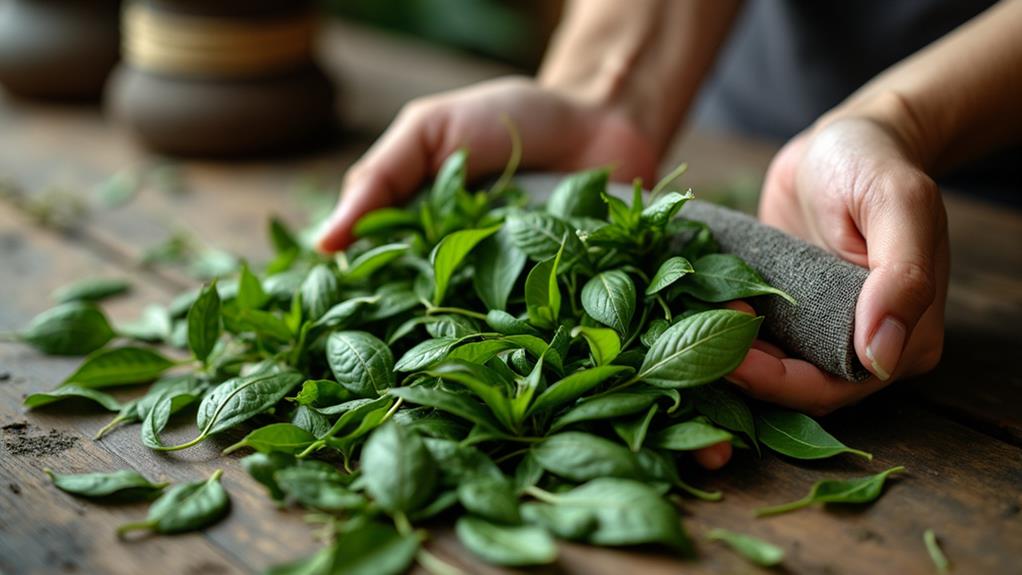
Once the leaves have been properly withered, the next significant step is rolling them. This process is imperative because it helps to break down the cell walls of the leaves, releasing fundamental oils that contribute to the tea's flavor profile. By rolling the leaves, you're not only shaping them but also enhancing their texture.
You'll notice that the leaves become softer and more pliable during rolling. This change in leaf texture is significant because it allows for a more uniform oxidation later on. As you roll, the pressure applied causes the leaves to twist and curl, which helps in releasing the natural juices and enzymes. These elements are crucial for developing the tea's unique flavor and aroma.
The rolling method can vary depending on the type of tea you're making. For example, oolong tea leaves might be rolled into tight balls, while green tea leaves are often twisted into long, thin shapes. Regardless of the method, the goal remains the same: to break down the leaves in a way that enhances their flavor profile. So, pay careful attention during this stage, as it sets the foundation for the tea's final taste and quality.
Oxidation Stage
Now that the leaves have been rolled, it's time to move on to the oxidation stage. This is where the magic happens. Oxidation is a vital process that influences the flavor profiles and color of the tea. As the leaves are exposed to oxygen, their chemical structure changes, affecting the tea's aroma and taste.
You can control the oxidation levels to produce different types of tea. For example, black tea undergoes full oxidation, resulting in rich, dark leaves and a robust flavor. In contrast, green tea is minimally oxidized, preserving its lighter color and fresh, grassy taste. Oolong tea falls somewhere in between, with partial oxidation giving it a unique, complex character.
To manage oxidation, you need to monitor the environment closely. Temperature, humidity, and time are all important factors. Typically, the leaves are spread out in a well-ventilated area, where they can oxidize evenly. This stage demands precision; even slight variations can alter the final taste.
Drying Techniques
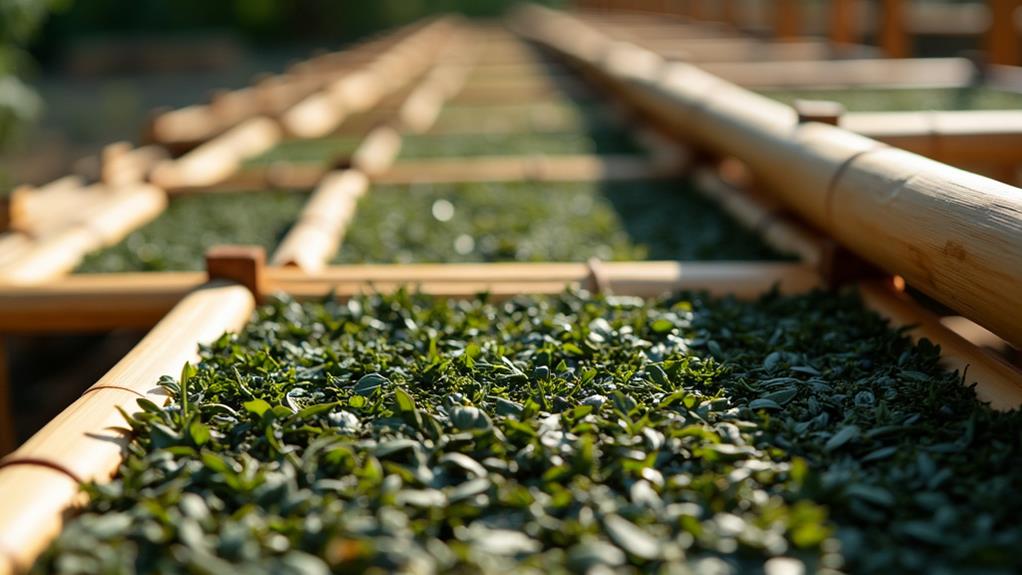
With the oxidation process complete, the next step is to lock in the tea's flavor and aroma through drying techniques. You have two main options: sun drying and machine drying. Each method has its own unique impact on the final product.
Sun drying is the traditional method. You spread the tea leaves out in the sun, allowing natural sunlight to evaporate the remaining moisture. This technique not only conserves energy but also imparts a unique, subtle flavor to the tea. However, it can be weather-dependent and time-consuming, requiring several hours to days for complete drying.
Machine drying, on the other hand, is more controlled and efficient. You place the tea leaves in a drying machine where hot air circulates, removing moisture quickly and uniformly. This method guarantees a consistent product and is less susceptible to environmental variables. Machine drying is particularly useful for large-scale production, where time and consistency are vital.
Both sun drying and machine drying are fundamental for preserving the tea's quality. By carefully choosing the drying method, you can improve the tea's natural flavors and guarantee it remains fresh until it reaches your cup.
Sorting and Packaging
The final steps in the tea-making process involve sorting and packaging, vital for delivering a high-quality product. Once the tea leaves are dried, they need to be sorted based on size, shape, and quality. Diverse sorting methods, such as sieving and hand-picking, guarantee that only the best leaves make it to the consumer. Sieving separates the leaves by size, while hand-picking allows for more precise selection, making sure that broken or inferior leaves are removed.
After sorting, the tea is ready for packaging. Packaging techniques play a significant role in maintaining the tea's freshness and flavor. You might notice that tea is often packaged in foil-lined bags, which help retain its aroma and prevent moisture from seeping in. Some teas are vacuum-sealed to further preserve their quality. Furthermore, tea can be packaged in loose-leaf form or in tea bags, depending on consumer preference.
Each packaging method has its advantages. Loose-leaf tea typically offers a richer flavor, while tea bags provide convenience. Regardless of the form, proper packaging techniques guarantee that the tea you brew is as fresh and flavorful as possible, delivering a delightful experience with every sip.
Frequently Asked Questions
What Types of Tea Are Available Globally?
You've got a wide array of tea types available globally. From classic black and green teas to oolong and white, there's something for everyone. Don't forget herbal infusions like chamomile and peppermint, which aren't true teas but offer great flavors. Understanding tea origins can help you appreciate each type's unique characteristics, regardless of it being a robust Assam from India or a delicate Sencha from Japan. Enjoy your exploration!
How Should Tea Be Stored to Maintain Freshness?
To keep your tea fresh, focus on the right tea storage. Store it in an airtight container to prevent exposure to air and moisture. Keep it in a cool, dark place away from direct sunlight and strong odors. These freshness tips guarantee your tea retains its flavor and aroma. Avoid storing tea in the refrigerator to prevent condensation and flavor absorption. Follow these steps, and you'll enjoy fresh tea every time.
What Health Benefits Are Associated With Drinking Tea?
Drinking tea offers numerous health benefits. You'll enjoy its antioxidant properties, which help combat free radicals and reduce inflammation. Herbal infusions like chamomile can aid in digestion and promote relaxation. Green tea, rich in catechins, elevates metabolism and supports heart health. Black tea improves gut health and may lower cholesterol levels. So, incorporating tea into your daily routine can greatly improve your general well-being.
How Does the Caffeine Content in Tea Compare to Coffee?
You might be wondering how the caffeine content in tea compares to coffee. Generally, tea has less caffeine than coffee, but it varies with tea varieties. Black tea usually has more caffeine than green or white tea. The caffeine effects from tea can be milder, providing a gentler energy increase without the jitteriness often associated with coffee. So, if you're sensitive to caffeine, tea might be a better option for you.
Can Tea Leaves Be Reused for Multiple Brews?
Yes, you can reuse tea leaves for multiple brews. When you make secondary brews, you'll still get a decent amount of flavor extraction, especially with high-quality leaves. Each subsequent brew will have a milder taste, but many people enjoy the subtle differences. Just remember to steep the leaves a bit longer with each reuse to get the most out of them. Don't throw them away after just one use!